
Haystack Solar Project
Natrona County, Wyoming
Haystack Solar is a privately funded solar and energy storage project currently in the development phase in Natrona County, Wyoming. The project is proposed to deliver reliable electricity to the regional grid as electricity demand in the state continues to increase, with a targeted commercial operation in the third quarter of 2029.

A place for clear
information and
open dialogue
Project at a Glance
259 MW
solar power plant
100 MW
battery storage
487 GWh
estimated annual energy production
46,000
homes powered with renewable energy (equivalent)
200-250
jobs expected to be created during construction, supporting local workers
$58M
Project Phases


Permitting
& Environmental Studies

Project Interconnection Studies & Agreement

Final Engineering
& Construction

Operation
& Maintenance

Decommissioning
& Recycling
Developed by an experienced U.S. energy partner
Haystack Solar is being developed by Enfinity Global, a U.S.-based renewable energy company headquartered in Miami, Florida, with a growing portfolio of solar projects across the United States. Enfinity owns, operates, and invests in energy assets for the long term. With projects in operation, under construction, and in development, Enfinity is focused on delivering new power capacity where it is needed while working closely with the communities that host its projects.
As an independent power producer (IPP), Enfinity produces and commercializes electricity to help strengthen the U.S. power grid and support economic growth. ‘Enfinity powers domestic manufacturing, infrastructure development, and emerging industries by bringing reliable new energy online quickly, responsibly, and with a long-term commitment to every project. We create local jobs, generate tax revenues, and deliver lasting community benefits.
In addition to its U.S. operations, Enfinity has an international renewable energy platform, with projects across Europe, Japan, and India, and employs over 400 people globally.
Natrona County Engagement
Enfinity is committed to being a long-term and responsible partner to the communities where it develops its energy projects. The Haystack Solar Project is expected to create local job opportunities— especially during construction— generate new tax revenue for Natrona County and contribute to the local economy over the long term.
Community Benefits
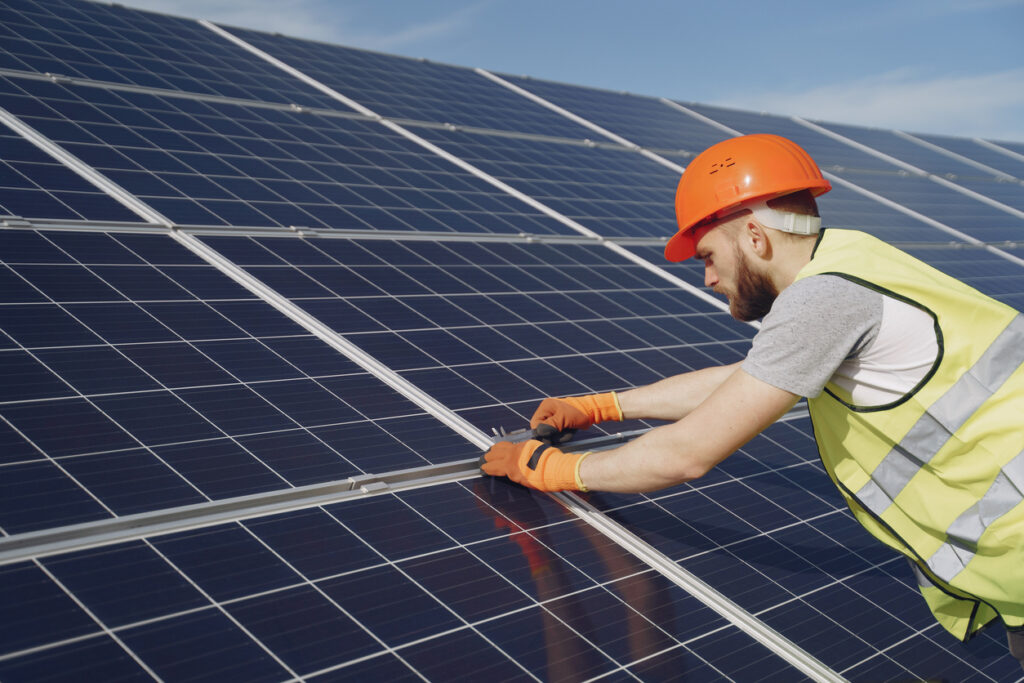
Local jobs
The project is expected to create approximately 200-250 construction jobs in phases over the 24-month construction period, with additional roles expected during operations and maintenance. We intend to prioritize the hiring of local subcontractors and local labor.
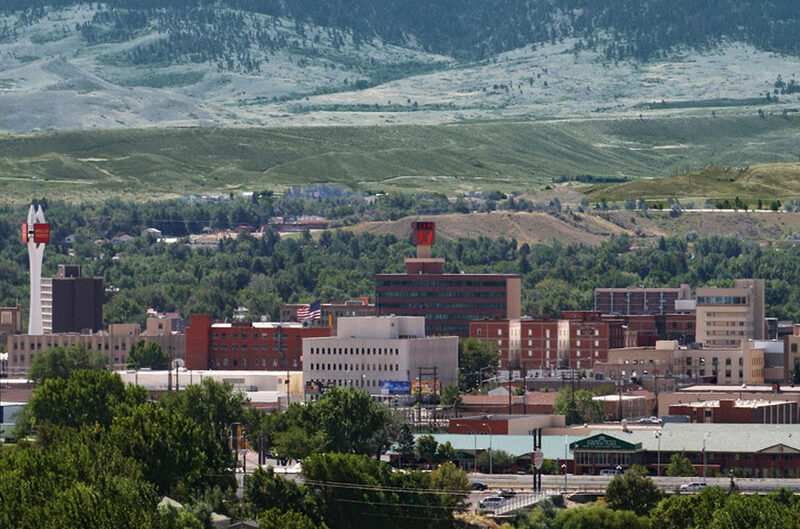
Local revenue
Throughout its life, the project is estimated to generate approximately $58 million in property tax revenue and over $12.4 million in sales and use tax revenue for Natrona County—without increasing residents’ tax rates. This will benefit local school systems and many other community public services.

Community initiatives support
Beyond the project itself, Enfinity plans to invest in community initiatives that provide tangible benefits to local residents. We engage with community members early in the process and look for meaningful ways to support local priorities and needs as the project moves forward. Community members with proposals for local projects or initiatives are encouraged to contact the Enfinity team.
Community dialogue
We want to be a good neighbor
We engage with local communities from day one through a dedicated Community Relations team, fostering open dialogue throughout the project lifecycle to address questions, listen to feedback, and incorporate local perspectives.

Long-term benefits for the local community
Beyond delivering electricity to the regional grid, the Haystack Solar Project is intended to provide long-term benefits related to land stewardship, environmental protection, and rural resilience.

Land use and environmental stewardship
During its operating life, the project is designed to allow the land to rest from more intensive uses while maintaining healthy ground cover. Native revegetation, stormwater management practices, and designated wildlife corridors are intended to support local biodiversity and preserve the land for future use once the project is decommissioned.

Energy reliability
By adding new generation capacity, Haystack Solar can help support grid reliability as electricity demand continues to grow across Wyoming and the broader region.
Our approach to responsible solar development and construction
At Enfinity, we develop solar and energy storage projects with safety, reliability, and long-term responsibility in mind. As a long-term independent power producer, we intend to stay involved throughout the entire life of each project—from early planning and construction to operations and eventual removal—so our projects are intended to remain reliable assets and good neighbors over time.

Respecting the land and the environment
Our projects are carefully designed to minimize impacts on the surrounding area. The layout includes setbacks from sensitive areas, such as wetlands and drainage features, and designated wildlife corridors that allow animals to move naturally across the site. With minimal need for grading, healthy ground covers will be maintained under and around the panels to help protect soil, reduce erosion, and support local plants and wildlife.

Building with care to minimize community impacts
We plan construction activities to minimize disruption to nearby residents and local travel. Access to the site is planned from Natrona Road, with specific measures to improve safety and reduce inconvenience, including road and bridge improvements, temporary traffic controls, clear signage, and the use of flaggers when needed. Dust will be managed using practical controls, and work areas will be maintained to keep impacts temporary and localized.
Throughout construction, we coordinate closely with Natrona County and state agencies to follow approved plans for traffic, drainage, erosion control, and public safety.
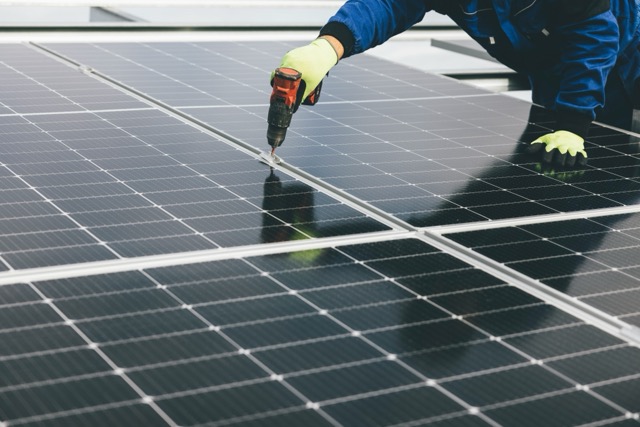
Safety and long-term planning
Safety is a key priority during both construction and operations. The battery energy storage system is designed with multiple safety layers to detect issues early and limit potential impacts. Emergency planning will be coordinated with local responders and will continue as the project advances.
The project is planned to operate for approximately 40 years. A decommissioning and reclamation plan is in place to ensure that, at the end of its life, the site can be responsibly restored.
How a solar power plant with battery storage works
A solar power plant produces electricity from sunlight and delivers it to the power grid, where it helps power homes, businesses, and public services. Panels generate electricity during the day, and electrical equipment converts it into the form used on the grid.
Solar panels are mounted on metal structures attached to steel posts, which raises the panels above the ground and leaves most of the land surface open. Many projects use tracking systems that move slowly and quietly to follow the sun and increase energy production. Solar facilities are designed to be quiet, with sound mainly coming from electrical equipment located within the site.
Battery storage adds flexibility. Instead of sending all solar electricity to the grid immediately, some energy can be stored and then delivered later—such as in the evening or during periods of higher demand—helping support grid reliability.
Solar and battery facilities are designed and operated in accordance with applicable safety codes, permits, and inspection requirements. Solar PV power generation involves no fuel combustion – the facility produces no air emissions or greenhouse gases during operation. The project currently specifics crystalline silicon panels, and available public health assessments indicate crystalline silicon is nontoxic and solar panels are considered safe for human health and the environment.
How a solar farm is built
Solar farms are built using a simple process that is mostly above ground. Once construction is finished, most of the site remains open land covered with vegetation.
1.Preparing the site
Before major work starts, the ground is prepared to reduce erosion and manage stormwater. Sites are often seeded early to help stabilize soil and support stormwater control during construction. A Stormwater Pollution Prevention Plan (SWPPP) is used to guide erosion and sediment control measures.
2.Installing the supports (piles)
Steel piles are driven into the ground to support the solar structures. This approach typically does not require concrete foundations, and the piles occupy only a small part of the land area.
3.Adding racking, trackers and modules
Solar panels are mounted on steel racking attached to the piles. Many projects use tracking systems that move slowly and quietly from east to west to follow the sun and maximize energy generation.
4.Connecting the electrical system (inverters)
Panels produce direct current (DC) electricity. That electricity is collected and sent to inverters, which convert it into alternating current (AC) electricity—the form used on the power grid.
5.Substation and grid connection
Electricity flows to a substation, where it is measured and adjusted to match grid requirements before being delivered to the local power system—just like other types of power plants connect to the grid.
6.Fencing and site management
Solar facilities are fenced for safety and security. Typically, specialized fencing is used around the main project area, while code-required chain link fencing may be used around the substation. Where appropriate, fencing is designed with small openings or clearance at ground level to allow the movement of small animals. Trees or shrubs may be added in some locations for visual screening and to support local habitat.
7.Finishing and restoration
After construction, disturbed areas are stabilized and reseeded using native seed mixes.
8.End of life: decommissioning and land restoration
At the end of a solar facility’s estimated 40-year operating life, the equipment is dismantled and removed in accordance with our decommissioning and reclamation plan. Solar panels and metal structures are recycled through established commercial recycling programs where commercially reasonable; battery components are managed through certified waste handling and recycling facilities in accordance with applicable federal and state requirements. The site is then graded, reseeded with native species, and restored to a condition suitable for future land use.
Frequently Asked Questions
Project basics
Where is the project located?
The project is proposed on private land in Natrona County, Wyoming, approximately 24 miles northwest of Casper and about 0.4 miles south of US Highway 20/26.
What is the size of the project?
The project is proposed as 259 MW DC of solar PV and 100 MW / 400 MWh of battery storage, across approximately 2,160 acres of private land.
What is the current status?
The project is in the development and permitting phase, which includes environmental studies, interconnection studies, and design.
When would construction start and when would it be completed?
The project anticipates starting site construction in Q4 2027, with an anticipated commercial operation date (COD) in Q3 2029 (if approved).
Community benefits
Will the project create jobs?
Yes. Construction and installation phases are estimated to create approximately 200–250 construction jobs, with additional roles during operations and maintenance.
Will it generate local tax revenue?
Yes. The project is estimated to generate approximately $58 million in property tax revenue and over $12.4 million in sales and use tax revenue for Natrona County—without increasing residents’ tax rates.
Construction impacts (traffic, dust, roads)
What should residents expect during construction?
Like any major infrastructure project, construction can involve temporary increases in truck traffic, noise from equipment, and dust in active work areas. Plans and coordination will be used to manage these impacts and prioritize public safety.
How will dust be controlled?
Dust control is planned using best management practices such as surface treatment and water where needed in active areas, along with road maintenance practices.
How will stormwater and erosion be managed during construction?
A site-specific stormwater approach, including a drainage plan and construction best practices are planned to control runoff and stabilize disturbed areas. Controls are inspected routinely and after storms; deficiencies are documented and corrected within the timeframe required by permit.
Safety, health, and noise
Are solar farms safe?
Solar facilities are designed and operated under applicable federal, state, and local safety codes and inspection requirements. During power generation, solar PV electricity generation does not involve combustion, so it does not produce air emissions or greenhouse gases at the site.
Are solar panels hazardous to human health?
The project currently specifies crystalline silicon panels. Peer-reviewed public health assessments, including studies published by the National Renewable Energy Laboratory, have concluded that crystalline silicon is nontoxic and that properly managed solar panels are safe for human health and the environment. Panel specifications are subject to final equipment procurement; the project team will confirm the panel type prior to construction.
Will the project be noisy?
Solar facilities are designed to be quiet. Most sound comes from electrical equipment (such as inverters and transformers) located within the site, and it is typically not audible beyond the project boundaries.
What safety systems are in place for the battery storage system?
The safety approach will deploy multiple layers of protection (“defense in depth”), including monitoring and early detection (smoke/heat/gas), alarms, and isolation features, along with site access controls and emergency planning coordinated with local responders.
Environment, wildlife, land, and water
How will wildlife movement be protected?
Based on coordination with Wyoming Game and Fish Department guidance, the layout includes three 500-foot-wide wildlife corridors and gates at corners and at approximately every 0.5 miles along the perimeter fencing to support wildlife movement.
Will the project impact wetlands or waterways?
A wetland delineation has been completed, and setbacks are included in the site plan to avoid sensitive areas such as drainages, streams, creeks, and wetlands.
Will the project use a lot of water?
No well is planned onsite. Water may be used primarily for dust control, certain construction activities and solar panel cleaning during operations. Water would be supplied from offsite providers.
How will weeds and invasive species be managed?
A noxious weed and invasive species management approach is planned in coordination with county and state guidance, including monitoring and control methods where needed.
Waste, recycling, and end-of-life
What happens to construction waste?
Construction waste will be sorted and managed in accordance with the project’s waste management plan. Packaging, scrap metal, and other recyclable materials are transported to licensed recycling facilities. Non-recyclable materials are transported to licensed disposal facilities by contracted waste management firms in accordance with applicable Wyoming state requirements.
What happens to panels and batteries at the end of the project’s life?
All equipment is removed at the end of the facility’s estimated 40-year operating life in accordance with the approved decommissioning and reclamation plan on file with Natrona County. Crystalline silicon solar panels and metal racking structures are recycled through established commercial recycling programs, where commercially reasonable; approximately 90% of panel materials by weight are recoverable through current commercial programs, based on SEIA 2025. Battery components are managed and recycled through certified facilities in accordance with applicable federal and state hazardous waste requirements, which govern the end-of-life handling of battery storage systems separately from solar panel recycling. Haystack ensures 100% landfill avoidance, and up to 95% of material is recycled for PV panels. Finally, the site is then graded, reseeded with native species, and restored for future use.
Stay Involved
Sign up to receive updates about the Haystack Solar Project and stay informed on key milestones and next steps.
How to contact us
You can submit a concern through any of the following channels
haystack.solar@enfinity.global
What information to include
To help us review and respond quickly, please include:
- Your name and preferred contact details (phone and/or email)
- The date you are submitting your concern
- A brief description of the issue
- The location (if applicable)
- The date and time of the incident (if applicable)
- Any photos or additional details that may help (optional)
What happens after you submit your questions
Acknowledgement
We will confirm we received your message.
Review
Your concern will be logged and reviewed by the appropriate project team member (for example: construction, environment, or safety).
Updates
We will provide updates as the review progresses and share a clear timeframe for follow-up.
Resolution
We aim to resolve concerns as quickly as possible. If something cannot be changed due to safety requirements, permits, or other constraints, we will explain why.
